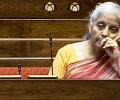
Opposition MPs in India's Rajya Sabha raised concerns about US President Donald Trump's tariff threats, demanding the government clarify its response and engage in discussions with opposition parties. Leaders like P Chidambaram and Sagarika Ghose warned of potential economic repercussions, including depressed exports, lower FDI, and a significant tariff burden. The debate also touched on other issues such as the government's economic policies, demonetization, and the impact of GST on common citizens.
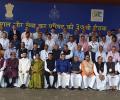
This is a moment when the leaders at the Centre and states must show true leadership for the sake of the country. And it is the top political leaders, not attorney generals or bureaucrats, who should be sitting together and settling this thorny issue of compensation, says Arvind Subramanian, former Chief Economic Adviser to the Government of India.

GST rates would depend upon whether the commodity is used by a rich person or a common man
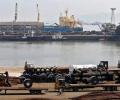
Companies are worried that any staggered roll-out of GST could result in cash flow issues with businesses not able claim tax credit due to breakage in the chain

The GST Council on Tuesday approved changes in tax rates on some goods and services while allowing states to issue an e-way bill for intra-state movement of gold and precious stones, officials said. The Council, chaired by Finance Minister Nirmala Sitharaman and comprising state counterparts, also cleared a host of compliance procedures for GST-registered businesses along with a GoM report on high-risk tax payers to check evasion. The discussion on the crucial issues of extension of compensation to states beyond June 2022 and the imposition of 28 per cent GST on casinos, online gaming and horse racing, will take place on Wednesday.
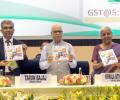
'We revolutionised the system in a manner so that the chances of leakage will be much lower than it was in the beginning.'

'From the tiniest to mid-level organisations and even some at the lower end of the large-scale ones would say that computerisation and the extensive documentation and regulatory requirements for GST have made the compliance process worse in many cases.'

The government should bring natural gas under the Goods and Services Tax (GST) regime to realise Prime Minister Narendra Modi's vision for a gas-based economy and raising the share of the environment-friendly fuel in India's energy basket, an industry body that represents the likes of Reliance Industries as well as state-owned firms, has said. Natural gas is currently outside the ambit of GST, and existing legacy taxes -- central excise duty, state VAT, central sales tax -- continue to be applicable on the fuel. In its pre-Budget memorandum to the finance ministry, Federation of Indian Petroleum Industry (FIPI), which boasts of members from across the oil and gas spectrum, also demanded rationalisation of GST on transportation of natural gas through pipeline as well as on re-gasification of imported LNG to help bring down cost of the environment friendly fuel.

The 47th GST Council meeting that is currently underway is slated to discuss a host of issues, including a mechanism for compensating states for revenue loss, tax rate tweaks in some items and relaxed registration norms for small online suppliers. Further, the meeting of the Council, chaired by the Union Finance Minister Nirmala Sitharaman and comprising state counterparts, will also clear levying the highest tax of 28 per cent on online games, casinos and horse racing, besides, measures to curb tax evasion, especially devising ways to tackle high-risk taxpayers in GST. "The meeting is being chaired by Hon'ble Union Minister of Finance @nsitharaman and many important decisions are expected to be taken at the meet," PIB Chandigarh tweeted.

Online skill-based gaming industry has made a case for retaining the service under 18 per cent GST slab instead of putting it into the highest 28 per cent tax rate category, saying the move will badly hit the $2.2-billion sector. The increase in taxation would not only have catastrophic impact on the industry but also encourage offshore operators who would circumvent Indian tax jurisdiction by hosting games in some other country, Games24x7 Co-CEO Trivikraman Thampy said. "It would be a triple whammy -- the industry loses out, the government loses out on tax revenue and players loses out as they would be exposed to unscrupulous operators," he said.

Farmer representatives and agricultural stakeholders urged the government to provide cheaper long-term credit, implement lower taxes, and double the PM-KISAN income support during a comprehensive pre-budget consultation with Finance Minister Nirmala Sitharaman on Saturday. The two-hour meeting saw a detailed discussion of proposals, aimed at addressing multiple challenges in the agricultural sector, with key demands focusing on financial relief, market reforms, and strategic investments.
In a first, Opposition-ruled states on Saturday got the Centre to delete from the records three minutes of the last GST Council meeting that provided for tweaking of agreed criteria for division of taxpayers under the Goods and Service Tax regime.

Supplying food to schools under mid-day meal scheme, pre-schools and anganwadis is exempt from GST, the Central Board of Indirect Taxes and Customs (CBIC) has said. Issuing a set of clarification on certain decisions taken by the GST Council in its 43rd meeting on May 28, the CBIC said it had received representations regarding applicability of GST on the issues as to whether serving of food in schools under mid-day meals scheme would be exempt if such supplies are funded by government grants and/or corporate donations. Under the goods and services tax (GST), any catering service, including mid-day meals, provided to an educational institution is exempt from the levy.

Parliament on Thursday cleared the decks for the rollout of the historic Goods and Services Tax from July 1 as it approved four supporting legislations to usher in the one-nation-one-tax regime.
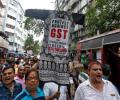
After 17 tumultuous years, a nationwide Goods and Services Tax (GST) will rollout from midnight of June 30, overhauling India's convoluted indirect taxation system and unifying the $2 trillion economy with 1.3 billion people into a single market.

Budget silent on issue, major decisions unlikely before 2014 election.

For 2019-20, the government proposes to collect Rs 6.10 lakh crore from CGST and Rs 1.01 lakh crore as compensation cess.

Know what terms like anti-profiteering, CGST, SGST, IGST means in the new regime

GST compensation law allows for imposition of cess on certain luxury goods like tobacco, high-end cars and aereated drinks to create a corpus for compensating states for any loss of revenue in the first five years

So far, 38.38 lakh taxpayers accounting for 64.42 per cent of the total businesses, who had registered in July, filed returns.
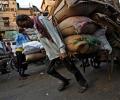
States should have enough time. We still do not know the rules. There are a lot of operational difficulties, says Jammu and Kashmir Finance Minister Haseeb Drabu.

Large states like Andhra, Chhattisgarh, Gujarat, Himachal, MP, Odisha, Punjab and Tamil Nadu would need compensation from the Centre
For fiscal 2019-20, the GST collection target has been budgeted at Rs 13.71 lakh crore.

A heated debate erupted in the Rajya Sabha over the ongoing strike by ASHA workers in Kerala, with Congress and CPI(M) MPs trading accusations over responsibility for addressing their demands for a higher honorarium and post-retirement benefits. Congress MP Jebi Mather alleged that both the Kerala government and the Union government had ignored the workers' pleas, while CPI(M) MP John Brittas countered by claiming Kerala provides the highest honorarium to ASHA workers. The debate also saw demands for an AIIMS in Kerala and a hike in MBBS seats, as well as concerns over maternal health, elderly care, and mental health in India.

Here's everything you need to know about the Goods and Services Tax Bill.

The Enforcement Directorate (ED) has uncovered "multiple irregularities" in the operations of TASMAC, the state-run monopoly controlling liquor trade in Tamil Nadu. The agency found evidence of "manipulation" in tender processes and "unaccounted" cash transactions worth Rs 1,000 crore through distillery companies. The ED alleges that these irregularities involved "kickbacks" to secure increased supply orders from TASMAC and systematic inflation of expenses by distillery companies to siphon off unaccounted cash.

Three men in Aligarh, Uttar Pradesh, received income tax notices demanding crores of rupees despite earning meager salaries, highlighting the growing issue of identity theft in India. The victims, who earn between Rs 8,500 and Rs 15,000 per month, were shocked to receive notices for Rs 33.88 crore, Rs 3.87 crore, and Rs 7.79 crore respectively. The authorities believe that businesses have been conducting large-scale transactions using forged Aadhaar and PAN cards in the names of these individuals.

"To begin with, people could face some difficulties because any changeover has its own problems. But it will settle down and the country will benefit from the new indirect tax regime," Jaitley said at an event organised by ABP News.
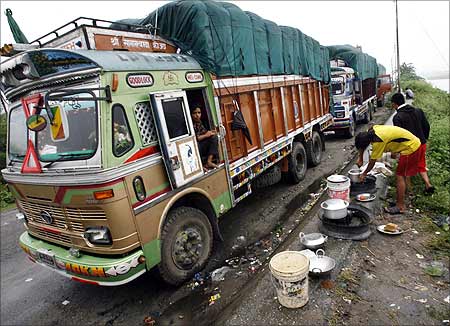
The Cabinet on Wednesday approved amendments to the GST bill to compensate states for revenue loss for five years on introduction of the uniform nationwide indirect tax regime.
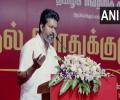
Actor Vijay, founder of the Tamizhaga Vettri Kazhagam (TVK) party, has declared that his party will challenge the ruling DMK in the 2026 Tamil Nadu Assembly elections. In a general council meeting, Vijay criticized the DMK's dynasty politics, their handling of law and order, and women's safety. He also targeted the BJP-led central government over issues like the Waqf Bill, delimitation, and the three-language policy. Vijay promised his party's support to working classes, government employees, and vowed to oppose projects harmful to natural resources and agriculture. He assured 100% safety for women and strict law and order if TVK forms the government. The party passed resolutions opposing the Waqf Bill, delimitation, and the three-language policy, and also voiced support for the two-language policy, finding a permanent solution for fishermen's issues, and opposing the Parandur airport project.
The Supreme Court collegium has initiated an initial inquiry against Delhi High Court judge Justice Yashwant Varma following the alleged discovery of a large stash of cash at his official residence during a fire incident. The collegium has also reportedly recommended Justice Varma's transfer to his parent high court, the Allahabad High Court. The inquiry will involve seeking a report from the Chief Justice of the Delhi High Court on the incident. The controversy surrounding the alleged discovery of cash was first reported by The Times of India. Justice Varma's proposed transfer is subject to the Centre's approval. The amount of cash found is not yet known. Justice Varma, currently heading a division bench dealing with sales tax, GST, company appeals and other appeals, did not hold court on Friday. Delhi High Court Chief Justice D K Upadhyaya expressed shock over the incident. The collegium reportedly received information about the cash discovery from government officials. Some collegium members have called for stricter action against Justice Varma, including seeking his resignation or launching an in-house inquiry. The Supreme Court has an in-house inquiry mechanism to deal with allegations against judges, which involves forming a committee to investigate and, based on the report, take further action. A judge of a constitutional court can only be removed through impeachment by Parliament.

'The professional or the freelancer needs to pay taxes from his pocket first and then wait for payments from his clients.'
If other states follow suit, it is going to become difficult for the GST Council to decide on the next stage of reforms.
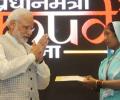
By democratising access to finance, empowering women and marginalised groups, and adapting to India's diverse regional landscapes, PMMY has helped fortify the country's grassroots growth engines, says Chief Economic Advisor to the Government of India, V Anantha Nageswaran.

The next meeting of the GST Council will be held on September 28-29 in Goa.
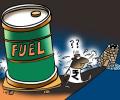
The GST Council might on Friday consider taxing petrol, diesel and other petroleum products under the single national GST regime, a move that may require huge compromises by both central and state governments on the revenues they collect from taxing these products. The Council, which comprises central and state finance ministers, in its meeting scheduled in Lucknow on Friday, is also likely to consider extending the time for duty relief on COVID-19 essentials, according to sources in the know of the development. GST is being thought to be a solution for the problem of near-record high petrol and diesel rates in the country, as it would end the cascading effect of tax on tax (state VAT being levied not just on the cost of production but also on the excise duty charged by the Centre on such output).
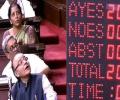
Enthused by the consensus in reaching four-tiered GST tax structure, particularly the unanimity achieved with Congress-ruled states, senior government sources were confident that the Central GST and Integrated GST Bills will be passed by both the Houses.

Is the curated and limited data put out by the central government sufficient enough to pass a judgement on the trend in GST collections, particularly that of the Centre?
Only 69 per cent of the assessees filed returns
Bringing petrol, diesel and other petroleum products under the single nation-wide GST regime will reduce taxes on these products and increase the revenue of both the Centre and states, Union Minister Nitin Gadkari said on Wednesday. Finance Minister Nirmala Sitharaman will definitely try to bring petrol and diesel under GST if she gets the support of the state governments, said Gadkari while addressing the Times Now Summit virtually. "In the GST Council, finance ministers of states are also members.
